
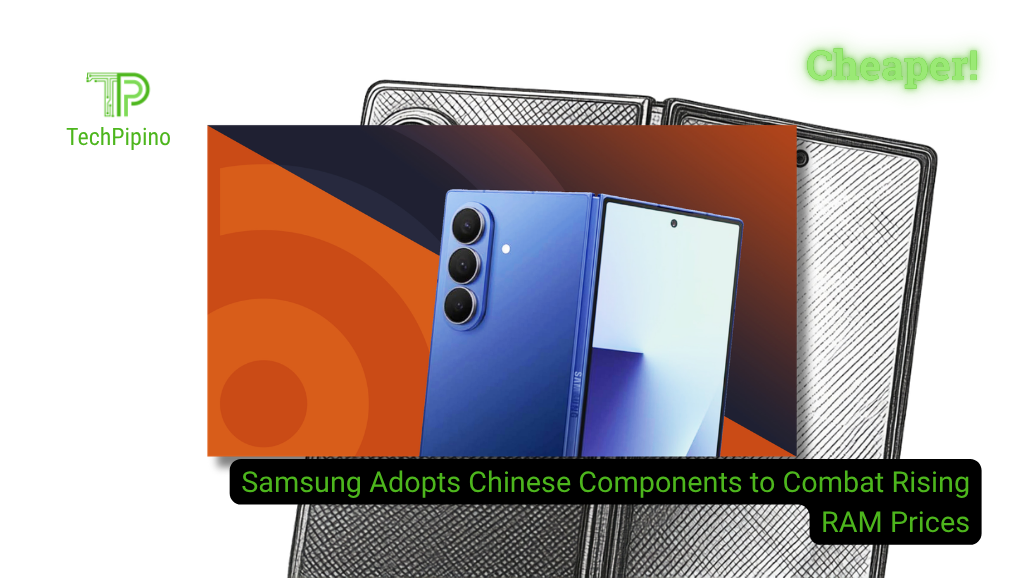
Samsung is reportedly pivotng toward Chinese suppliers for OLED panels, foldable hinges, and camera modules to offset the surging cost of memory chips in 2026. By diversifying its supply chain beyond South Korean borders, the tech giant aims to absorb the financial impact of expensive DRAM without passing the burden onto consumers through higher retail prices.
The Strategy: Swapping Components to Protect Margins
The global semiconductor landscape is currently facing a significant hurdle as memory chip prices surge, threatening the price stability of mid-range and budget devices. For Samsung, the solution isn’t just about cutting corners, it is about strategic substitution.
According to a report from Korean publication DealSite, Samsung has begun replacing its high-cost “in-house” components with parts from Chinese manufacturers who have achieved technological parity. This shift is most evident in the Galaxy A series, where the upcoming Galaxy A57 is expected to utilize OLED panels from CSOT rather than Samsung Display.
Impact on Foldables and Flagships
The cost-cutting measures are not limited to the budget segment. The Galaxy Z Flip7 will reportedly transition its hinge mechanism from long-time Korean partner KH Vatec to the Chinese supplier Huanli. This is a critical move, as the hinge represents a massive portion of a foldable’s bill of materials (BoM).
Even the premium Galaxy S series is seeing a transition, with certain ultrawide camera modules now being sourced from Chinese vendors. This approach allows Samsung to maintain the high RAM capacities required for modern AI features while keeping the overall cost of the device competitive against rivals like the OnePlus Nord 6.
Systems Thinking: Why This Matters for Performance
From a systems perspective, a smartphone’s performance is a balance of various hardware trade-offs. If Samsung were to maintain an all-Korean supply chain during a RAM price spike, they would be forced to either:
- Increase the MSRP, potentially losing market share.
- Reduce the amount of physical RAM, which would negatively impact multitasking and long-term OS fluidness.
By opting for Chinese OLEDs and hinges, Samsung can afford to keep 8GB or 12GB of RAM as the standard. While purists may prefer domestic Korean parts, the reality is that modern Chinese components often meet the same rigorous quality standards for brightness and durability.
Quick Specs: Sourcing Shift 2026
| Component | Previous Supplier | New Reported Supplier | Impacted Device(s) |
| OLED Panels | Samsung Display | CSOT | Galaxy A57 |
| Foldable Hinge | KH Vatec | Huanli | Galaxy Z Flip7 |
| Camera Modules | Various (KR) | Various (CN) | Galaxy S Series |
| Memory (RAM) | Samsung Semiconductor | Internal (High Cost) | Entire Portfolio |
Why It Matters
Samsung’s increasing reliance on the Chinese supply chain marks a pragmatic shift in the industry. As smartphone prices climb globally, the “Made in Korea” label is being sacrificed to ensure that mid-range devices remain accessible. This move protects the consumer’s wallet but signals a challenging era for South Korea’s local component ecosystem, which must now compete with the aggressive pricing and maturing technology of Chinese rivals.
FAQ
Why is Samsung using Chinese screens instead of their own?
Samsung Display panels are often more expensive due to higher overhead and advanced R&D costs; switching to CSOT allows the mobile division to lower production costs.
Will the Galaxy Z Flip7 hinge be less durable?
There is no evidence to suggest a drop in quality, as Samsung’s quality control standards remain consistent regardless of the supplier’s country of origin.
Is RAM getting more expensive for all phone brands?
Yes, a global shortage and increased demand for AI-capable hardware have driven up DRAM prices for every manufacturer in 2026.
Does this affect the Galaxy S26 series?
While the S series remains the gold standard, reports indicate that specific non-core components like ultrawide camera modules are already being sourced from China to manage costs.


