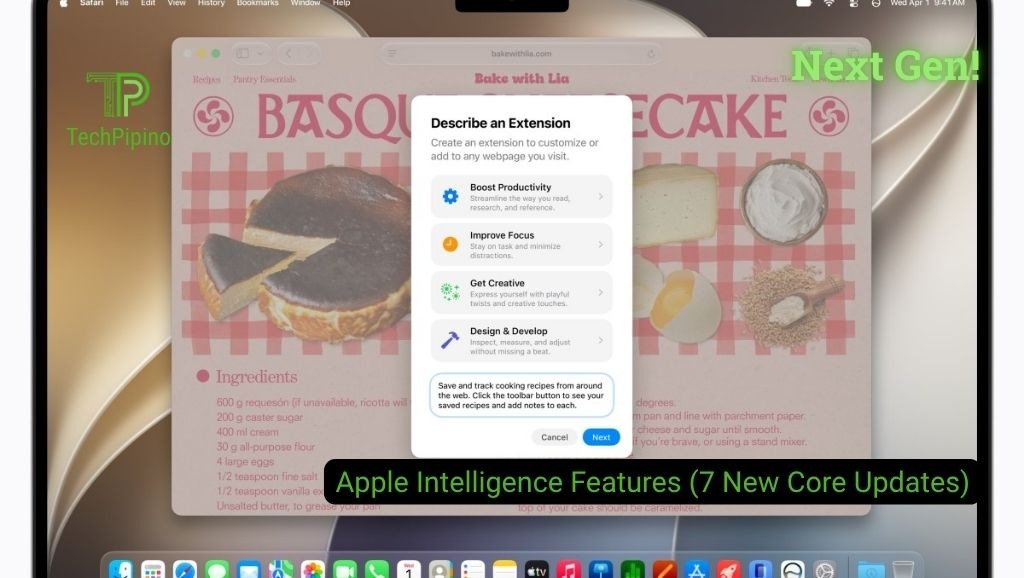
Apple officially announced its next-generation Apple Intelligence features during the Worldwide Developers Conference, detailing an architectural shift across iOS 27, iPadOS 27, macOS 27, watchOS 27, and visionOS 27. Rather than relying solely on cloud-based processing, Apple is implementing a hybrid execution framework that splits tasks between on-device neural processing units (NPUs) and its dedicated Private Cloud Compute infrastructure. This approach directly addresses local computing bottlenecks while enforcing strict data isolation.
The announcement follows initial leaks regarding Apple Intelligence features on iOS 27, confirming that local hardware resource constraints dictate the list of compatible devices.
Architectural Paradigm: Private Cloud Compute and Local NPUs
Apple Intelligence enforces a hardware-locked privacy infrastructure. Routine generative text prompts and contextual assistance execute locally on the device’s NPU. For intensive generative tasks, such as the photorealistic rendering inside the new Image Playground tool, the platform offloads telemetry data to Private Cloud Compute.
This infrastructure leverages custom Apple Silicon servers that analyze requests without caching user metrics, preventing data access from outside entities or Apple itself. This local-first ecosystem design dictates strict systemic prerequisites, requiring a baseline architecture built around high memory bandwidth to prevent operational latency. This model stands in contrast to alternative solutions in the industry, such as the competing Gemini Intelligence system requirements that scale across broader hardware brackets.
System-Level OS and Image Optimization
The deep integration of Apple Intelligence features into native subsystems fundamentally alters core operational behaviors:
- Spatial Reframing and Clean Up: The Photos app relies on localized generative fill models. Spatial Reframing computes perspective adjustments in real time, generating entirely new content only where the field of view has shifted to maintain structural fidelity without standard cropping degradation.
- Agentic Automation via Passwords and Shortcuts: Safari and the standalone Passwords app introduce direct agentic interactions. The operating system can execute multi-step scripts to navigate external websites, autonomously replacing compromised credentials with secure strings. Similarly, Describe a Shortcut compiles natural language inputs into functional automation blocks.
- Contextual Safari Subsystems: Safari incorporates automatic tab categorization based on semantic clustering. The browser also deploys a persistent background agent called Notify Me, which monitors client-side alterations on designated web pages to track product restocks or structural modifications in real time.
Hardware Support and Resource Constraints
Because localized generative execution places heavy demands on the system memory subsystem, Apple Intelligence requires a strict hardware floor. Devices must feature specialized silicon capable of parallel NPU execution alongside a high allocation of unified memory.
| Device Tier | Hardware Requirement | Minimum Memory Allocation |
| iPhone | iPhone 15 Pro, iPhone 15 Pro Max, iPhone 16 or later | 8GB |
| iPad | iPad mini (A17 Pro), M1 models or later | 8GB |
| Mac | MacBook Neo, M1 models or later | 8GB |
| Wearables | Apple Watch Series 10+, Ultra 2+, Vision Pro | Platform Dependent |
Certain generative tools, such as local image compilation, carry daily operational thresholds. These system limits can be scaled via an active iCloud+ data tier.
Why It Matters
The deployment of Apple Intelligence highlights a industry transition where machine learning utilities operate as native system-level services rather than sandboxed applications. By bridging local NPU execution with Private Cloud Compute, the framework scales beyond local hardware constraints without exposing raw user data vectors to cloud storage telemetry. This strict system topology demonstrates that memory capacity and bus bandwidth, rather than raw CPU clock frequency, are the defining constraints for next-generation personal computing.
Frequently Asked Questions
Which iPhone models support Apple Intelligence features?
Support is limited to the iPhone 15 Pro, iPhone 15 Pro Max, and the iPhone 16 series or later. Legacy hardware models lack the NPU performance profiles and the 8GB memory baseline required to run the local models.
How does Private Cloud Compute maintain user data privacy?
Private Cloud Compute routes complex data requests to isolated Apple Silicon servers running a verifiably secure operating system. The data is processed exclusively to execute the targeted request and is never permanently retained or shared.
Are there usage caps on generative image features?
Yes, specific generative tools within the Image Playground suite carry distinct daily limits. These operational thresholds can be expanded through an active iCloud+ subscription plan.
Can Safari automatically update compromised credentials?
The updated Passwords framework utilizes integrated automation scripts within Safari to navigate third-party web domains, modify weak or leaked credentials, and update the localized security database following a single user verification tap.


