
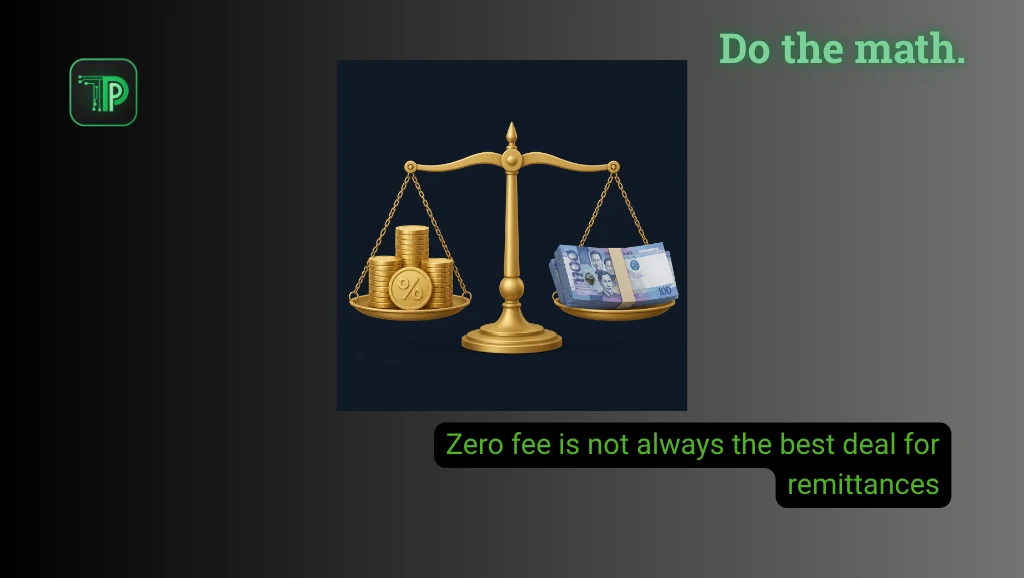
A transfer advertised as having no fee is not automatically the cheapest way to send money home. The exchange rate can matter just as much. To compare services fairly, look at how many pesos your recipient gets for the same total amount you spend.
This matters to overseas Filipinos sending money to family in the Philippines. A slightly better exchange rate can offset a stated transfer fee, although the result depends on the amount, the provider and any other charges.
What is the difference between a fee and an exchange rate?
A transfer fee is a charge for processing the transaction. It may be added to the amount you send or deducted from the money available for conversion. Taxes or other charges may also apply.
The exchange rate sets how much one currency buys in another. For example, a rate of PHP 14.50 per Saudi riyal means SAR 1 converts to PHP 14.50 under that quote. Providers offer different rates, and a displayed rate may change before you confirm.
A zero-fee transfer can still use a rate that delivers fewer pesos than another service. Compare the final quote instead of relying on the fee label alone.
Example: Compare the same total budget
Suppose you have SAR 1,000 in total to spend, including any transfer fee. These figures are hypothetical and are not current provider quotes:
- Service A charges SAR 0 and converts SAR 1,000 at PHP 14.50 per riyal. The recipient receives PHP 14,500.
- Service B charges SAR 10 from the same budget and converts the remaining SAR 990 at PHP 14.70 per riyal. The recipient receives PHP 14,553.
In this example, Service B delivers PHP 53 more despite its fee. That result assumes there are no other charges. A different amount or rate could change the answer.
How to compare two remittance quotes
- Set the same total budget. Include the transfer fee in the amount you can spend. If the fee is charged separately, account for it rather than comparing only the amount converted.
- Select the same destination and payout method. A bank deposit, wallet credit and cash pickup can have different prices or availability.
- Request quotes close together. Rates and promotions change, so a quote from yesterday may not match one available now.
- Compare the final amount received. Check whether the displayed peso amount already accounts for applicable charges. Do not subtract a fee twice.
- Check what happens after receipt. If the recipient must pay a cash-out or withdrawal fee, include that actual cost. Also check delivery time, limits, identification requirements and the provider’s support terms.
- Review the confirmation screen. Make sure the recipient, payout method, total charge and expected amount are correct before you pay.
Providers show fees and converted amounts before you confirm. GCash’s help center, for example, says outbound transfers show the fees and the converted amount on the confirmation page. Use that screen to compare.
Is the mid-market rate the rate I will receive?
An online currency converter can show a reference rate, but the rate on your actual transfer quote is the one to inspect. Confirm whether it is guaranteed and for how long. A provider’s final quote may differ from a converter result.
Takeaway
The best quote is the one that meets your recipient’s needs at a cost and delivery time you accept. Compare the same total budget, review the final pesos received and check the terms before confirming. For a current example of a fee waiver, see our GCash and Enjaz promo article.
Remittance comparison FAQ
Is a zero-fee transfer always the cheapest?
No. A provider can charge no separate fee while offering a less favorable exchange rate. The example above shows a fee-charging option delivering more pesos.
Should I compare the amount sent or the amount received?
For a fixed budget, compare the final pesos received after all applicable costs. To deliver a fixed peso amount, compare the total you must pay to deliver it.
Can I compare different payout methods directly?
Only with care. Bank deposits, wallet credits and cash pickup can differ in price, speed and limits, so compare like with like.


