
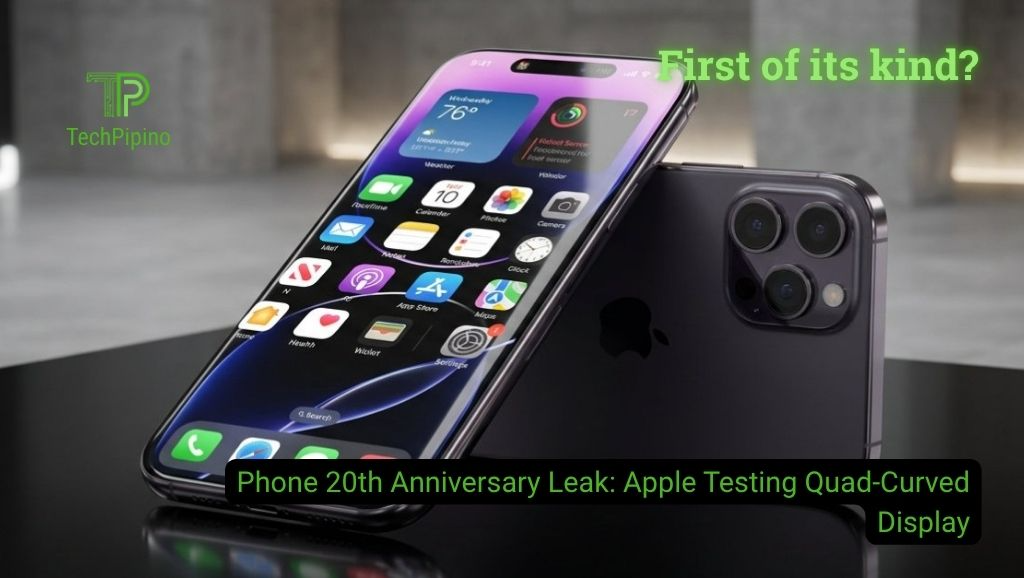
Apple is reportedly developing a quad-curved display for its 20th anniversary iPhone, marking a significant departure from the flat-edge design language used since the iPhone 12 series. According to reports from Digital Chat Station, Apple is collaborating with Samsung to produce a polarizer-free OLED panel that curves on all four sides. This shift suggests a move toward a more ergonomic, bezel-less aesthetic for the 2027 milestone device.
The Shift to Quad-Curved Display Architecture
The decision to adopt a quad-curved design is more than a visual choice. In mobile engineering, curving all four edges requires a fundamental redesign of the chassis and internal component placement. While flat displays prioritize structural rigidity and screen protection, a quad-curved panel focuses on ergonomics and gesture fluidity.
By removing the polarizer, Apple can achieve a thinner display stack. This reduction in thickness allows for better light transmittance and power efficiency, which is critical for maintaining battery life in a device that may prioritize a slimmer profile. The customized curvature radius indicates Apple is likely aiming to balance the immersive look of curved glass with the palm-rejection reliability that flat screens provide.
Collaborative Engineering with Samsung
Samsung remains a primary partner for Apple’s high-end display needs. The development of this specific panel involves integrating “Pol-less” (polarizer-less) technology, which Samsung previously commercialized in its folding devices. In a traditional smartphone system, the polarizer blocks external light reflections but also absorbs a portion of the screen’s brightness.
Removing it requires a color filter on encapsulation (COE) to manage reflections. This systems-level change means the iPhone 20th anniversary model could deliver higher peak brightness while consuming less power, directly impacting the sustained performance of the display under direct sunlight.
Impact on Durability and Ergonomics
A quad-curved design introduces challenges for drop resistance. Flat frames provide a metal buffer that absorbs impact energy. When glass extends to all four edges, the structural frame must be reinforced elsewhere to prevent panel failure. This likely points toward the use of advanced titanium alloys or new glass-ceramic composites to maintain the durability standards established by current models.
From a software perspective, iOS will need to adapt. A screen that curves at the top and bottom affects how users interact with the Control Center and notification shade. We expect Apple to implement hardware-level palm rejection to ensure that the increased glass surface area does not lead to accidental inputs.
Rumored Technical Specifications
| Component | Reported Specification |
| Display Type | Polarizer-free OLED (COE) |
| Design | Quad-curved glass |
| Manufacturer | Samsung Display |
| Target Release | 2027 (iPhone 20th Anniversary) |
| Feature | Custom curvature radius |
Why It Matters
The move to a quad-curved, polarizer-free display signals Apple’s intent to reclaim the lead in industrial design. By moving away from the flat-panel trend it helped popularize, Apple is prioritizing a “continuous” physical form factor. This transition is not just about aesthetics: it is a calculated engineering trade-off that swaps the simple durability of flat glass for a thinner, more efficient, and more ergonomic interface that aligns with the next decade of iOS interaction.
Frequently Asked Questions
Will the 20th anniversary iPhone have buttons?
Current rumors suggest Apple may move toward solid-state or capacitive buttons to complement the seamless quad-curved glass design, though this is not yet confirmed.
Does a curved screen make the phone harder to repair?
Yes, quad-curved displays typically involve more complex bonding processes, which can increase the cost and difficulty of screen replacements compared to flat panels.
What are the benefits of a polarizer-free screen?
Removing the polarizer allows the display to be thinner, brighter, and up to 25% more power-efficient, extending battery life during screen-on tasks.
When will the 20th anniversary iPhone be released?
Since the original iPhone launched in 2007, the 20th anniversary milestone falls in 2027, likely following Apple’s traditional September release cycle.


