
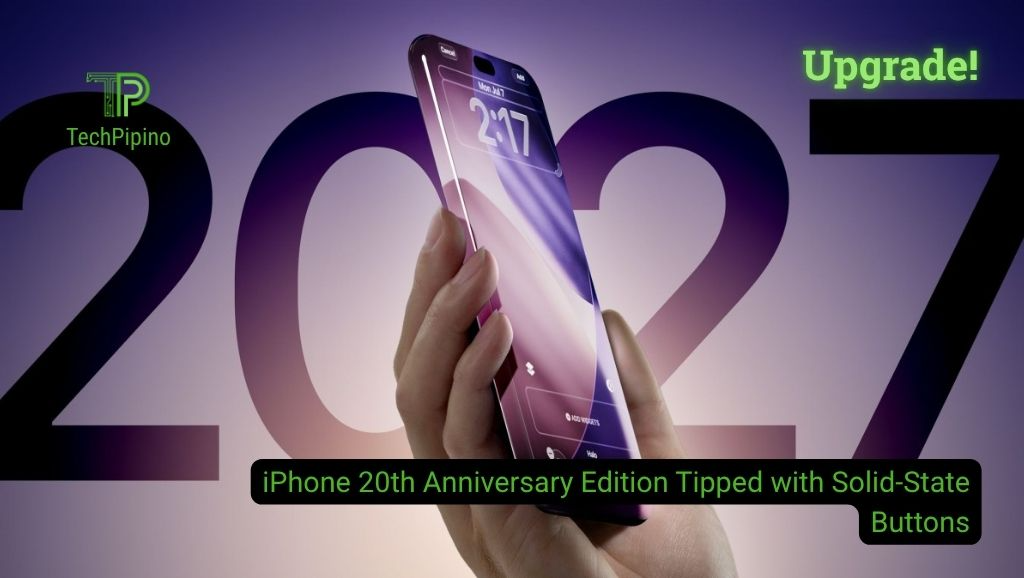
Apple is reportedly testing solid-state buttons for its 20th anniversary iPhone, a move that could fundamentally redefine the device’s structural integrity and tactile interaction. Unlike traditional mechanical switches that rely on physical movement, these buttons use haptic engines to simulate the sensation of a press. This shift is not merely aesthetic: it serves as a mechanical solution to long-term wear and water ingress, potentially allowing Apple to achieve a seamless, all-glass chassis that traditional moving parts would otherwise prohibit.
Structural Evolution: Solid-State Mechanics
The integration of solid-state buttons represents a major leap in systems thinking for smartphone durability. Mechanical buttons are historically a point of failure, both in terms of physical fatigue and as a gateway for liquid and dust. By removing these moving components, Apple can consolidate the internal frame, contributing to the rumored quad-curved display that blends into the sides of the device.
According to recent reports, these buttons have passed rigorous testing in extreme environments, including sub-zero temperatures and high-moisture scenarios. To ensure functionality when the device is powered down, Apple is allegedly utilizing a dedicated low-power chip. This processor registers pressure and triggers the haptic engine even if the main battery is depleted, maintaining a consistent user experience during emergency situations.
Display and Sensing Systems
The 20th anniversary model is expected to push display technology beyond current LTPO vs LTPS display standards by moving toward a completely “invisible” sensor array. The report suggests the device will feature under-display Face ID and a hidden selfie camera embedded within a tandem OLED panel.
This dual-layer OLED structure, which we previously saw in the 2024 iPad Pro, offers higher sustained brightness and improved longevity. By pairing this with an under-display sound system, Apple can eliminate the earpiece grille entirely. This creates a unified acoustic-visual system where the display itself acts as a diaphragm, vibrating to produce audio for calls.
Battery and Thermal Management
To power these complex haptic systems and the high-density tandem OLED display, the new iPhone is tipped to include a 6,000mAh battery. This is a significant jump in battery capacity meaning, likely necessitated by the energy demands of multiple haptic actuators and the increased surface area of the quad-curved screen.
The move to a solid-state design also impacts thermal management. Without the gaps required for mechanical buttons, the internal vacuum can be more tightly controlled, though it places more pressure on the internal cooling solution to dissipate heat through the glass and frame.
Quick Specs Table
| Feature | Rumored Specification |
| Display | Tandem OLED, Quad-Curved, Under-Display Face ID |
| Buttons | Solid-State with dedicated low-power haptic chip |
| Audio | Under-display “earspeaker” sound system |
| Battery | 6000mAh with reverse wireless charging |
| Durability | Next-gen Ceramic Shield (Scratch-focused) |
Why It Matters
The 20th anniversary iPhone appears to be a laboratory for Apple’s “portless” future. By replacing the last few mechanical vulnerabilities with solid-state logic and haptics, Apple is moving toward a hermetically sealed computing slab. This shift prioritizes structural permanence over mechanical simplicity, signaling that the next decade of mobile design will be defined by how well software can simulate the physical world.
FAQ
What are solid-state buttons?
Solid-state buttons are non-moving parts that use haptic vibrations to mimic the feel of a physical click. They are more durable and provide better water resistance than traditional mechanical switches.
How do the buttons work if the phone is dead?
A dedicated low-power chip remains active even when the primary OS is off. This chip detects pressure and provides haptic feedback, ensuring users can still trigger power or volume functions.
What is a tandem OLED display?
Tandem OLED uses two layers of light-emitting pixels stacked on top of each other. This results in higher peak brightness and a longer lifespan compared to single-layer OLED panels.
Will the anniversary iPhone have a physical SIM slot?
While not explicitly mentioned in this report, the push toward a seamless, buttonless, and grille-free design suggests Apple may further lean into eSIM-only configurations to maintain chassis integrity.


