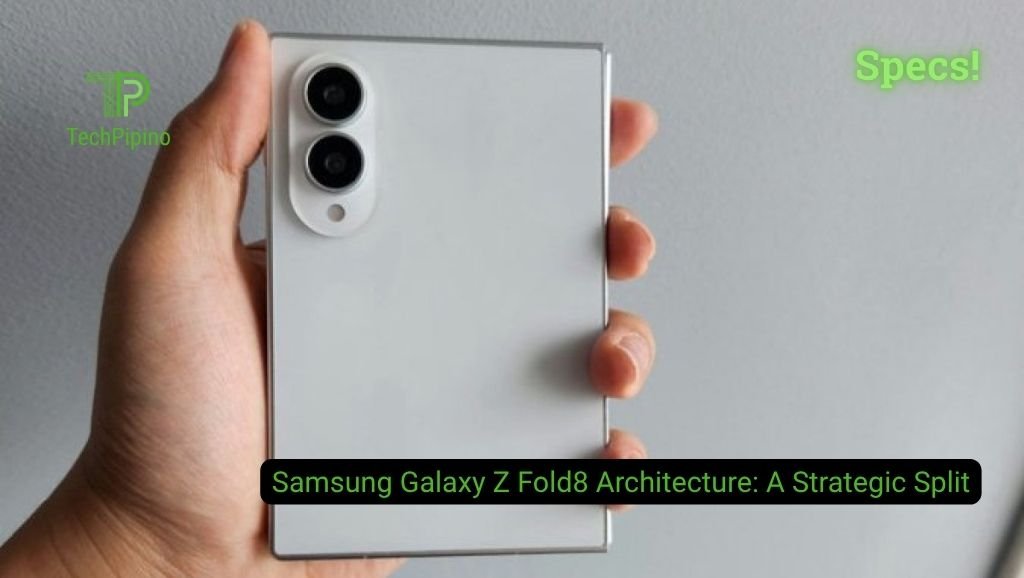
Samsung is preparing a structural shift for its 2026 foldable lineup. By reclassifying its hardware strategy, the company is effectively bifurcating the user experience between the ergonomic-focused Galaxy Z Fold8 and the performance-oriented Galaxy Z Fold8 Ultra. This move signals a departure from the traditional singular flagship approach, targeting distinct user demographics through physical design rather than just internal component tiers.
The Architectural Pivot
The device formerly recognized as the “Fold Wide” will officially launch as the Galaxy Z Fold8. This model prioritizes a wider aspect ratio, aiming to solve long-standing user complaints regarding the narrow cover displays of the Galaxy Z Fold7. By adopting a 16:10 cover screen ratio, the hardware aligns more closely with standard smartphone ergonomics, allowing for more fluid transitions between folded and unfolded states.
Conversely, the Galaxy Z Fold8 Ultra carries the mantle of the direct successor to the previous generation’s form factor. It retains the more traditional, taller profile, likely aimed at power users who prioritize vertical screen real estate for multitasking and productivity.
Performance and Thermal Dynamics
Both models are expected to utilize the Snapdragon 8 Elite Gen 5 for Galaxy SoC. From a systems thinking perspective, this chipset is critical for maintaining performance within the constraints of a thinner chassis. With an unfolded thickness reported at just 4.5mm for the standard Fold8, thermal dissipation is a primary challenge. The use of a 3nm fabrication process is essential here, as it reduces power leakage and allows for sustained peak clock speeds without immediate thermal throttling.
Quick Specs Table
| Component | Specification |
| SoC | Snapdragon 8 Elite Gen 5 |
| RAM | Up to 12GB LPDDR5X |
| Battery | 4800mAh (Fold8) / 5000mAh (Ultra) |
| Charging | 45W wired / 15W wireless |
| Fold8 Display | 7.6-inch (4:3) / 5.5-inch (16:10) |
| Weight | 201g (Fold8) |
Why It Matters
This shift suggests that Samsung recognizes foldable adoption is plateauing among traditional enthusiasts. By introducing a “standard” Z Fold8 that feels more like a conventional smartphone when closed, the company intends to lower the barrier to entry for mainstream consumers. Meanwhile, the “Ultra” branding reserves the premium price point for those who demand maximum display surface area and camera capability. Whether this strategy succeeds depends on price parity; if the standard Z Fold8 remains at a high premium while offering fewer internal features, it may struggle against established competition.
FAQ
Is the Galaxy Z Fold8 a direct successor to the Z Fold7?
No. The Galaxy Z Fold8 Ultra is considered the direct successor to the Z Fold7, while the standard Z Fold8 is a new, wider-format entry in the lineup.
What is the primary differentiator of the Z Fold8?
The standard Z Fold8 features a wider 16:10 cover display, designed to provide a more conventional smartphone experience compared to the narrow profile of previous models.
Will the Z Fold8 support 45W charging?
Yes, reports indicate the device will support 45W wired charging and 15W wireless charging.
Which chip powers these foldables?
Both the Z Fold8 and the Z Fold8 Ultra are expected to run on the 3nm Snapdragon 8 Elite Gen 5 processor.


