
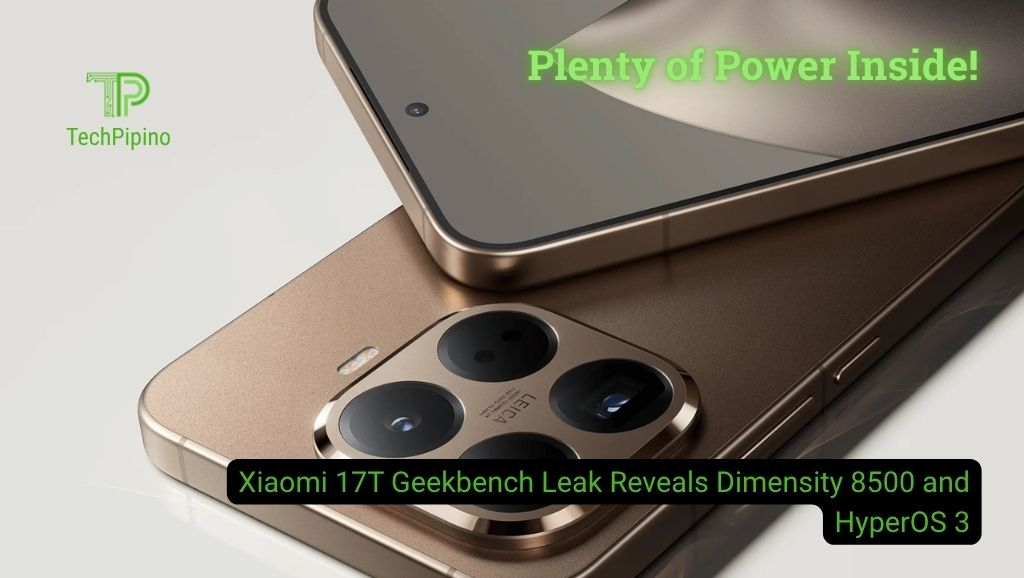
The Xiaomi 17T has appeared on Geekbench AI, confirming that the upcoming sub-flagship will be powered by the MediaTek Dimensity 8500 chipset and 12GB of RAM. This benchmark listing suggests that Xiaomi is prioritizing sustained efficiency and AI-driven task management for its next “T” series iteration, positioning the device as a high-performance alternative to the premium Xiaomi 17 flagship.
Dimensity 8500: A System-Wide Efficiency Shift
The heart of the Xiaomi 17T is the Dimensity 8500, a chipset that utilizes a tiered core architecture to balance thermal management with raw output. With a prime core reaching 3.40GHz, the system is designed to handle burst workloads, such as photo processing or app launches, without the rapid thermal throttling often seen in overclocked mid-range silicon.
For the end user, this architectural choice translates to more consistent frame rates during extended gaming sessions. While the Mali-G720 MC8 GPU provides the necessary graphical throughput, the inclusion of 12GB of RAM ensures that HyperOS 3 can maintain more active background processes, reducing the need for aggressive RAM expansion which can sometimes introduce storage latency.
Display and Battery Integration
According to reports, the Xiaomi 17T will feature a 6.59-inch flat OLED panel with a 1.5K resolution. Choosing a flat panel over a curved one reflects a focus on utility and durability, specifically for users who find curved edges prone to accidental touches. Given the 1.5K resolution, the device strikes a middle ground between the clarity of 2K and the power efficiency of 1080p.
The synergy between the 7000mAh battery and 67W charging indicates a pivot toward extreme endurance. While 67W is not the fastest in Xiaomi’s portfolio, the massive capacity suggests a “two-day battery” target. This larger battery capacity is likely enabled by denser silicon-carbon battery technology, allowing for a higher energy density without significantly increasing the phone’s physical footprint.
Camera and Optics Strategy
The Xiaomi 17T is expected to utilize a triple-camera system featuring a 50MP primary sensor. Unlike the Pro model, which is rumored to include a periscope lens, the standard 17T will likely rely on a traditional telephoto sensor.
This hardware distinction creates a clear hierarchy in the lineup: the standard model serves as a performance-first workhorse, while the Pro model caters to enthusiasts requiring advanced optical zoom capabilities. Both models will benefit from the improved ISP (Image Signal Processor) within the Dimensity series, which focuses on noise reduction and HDR consistency in challenging lighting.
Quick Specs Comparison
| Feature | Xiaomi 17T (Leaked) |
| Chipset | MediaTek Dimensity 8500 |
| RAM | 12GB |
| OS | Android 16 (HyperOS 3) |
| Display | 6.59-inch 1.5K Flat OLED |
| Battery | ~7000mAh |
| Charging | 67W Wired |
| Rear Camera | 50MP + 12MP + 50MP |
| Front Camera | 32MP |
Why It Matters
The Xiaomi 17T represents a shift where “sub-flagship” no longer means compromising on battery life or daily stability. By opting for the Dimensity 8500 and a massive 7000mAh cell, Xiaomi is targeting a segment of power users who value sustained utility and software longevity over the experimental features found in the Ultra series.
FAQ
What is the processor in the Xiaomi 17T?
The Xiaomi 17T is powered by the MediaTek Dimensity 8500 chipset, featuring a 3.40GHz prime core.
Does the Xiaomi 17T support HyperOS 3?
Yes, the Geekbench listing confirms the device runs Android 16, which will be layered with Xiaomi’s HyperOS 3.
How big is the battery on the Xiaomi 17T?
Reports indicate a massive 7000mAh battery, supported by 67W fast charging.
What is the difference between the 17T and 17T Pro?
The Pro model is expected to feature a more powerful Dimensity 9500 chip and a periscope telephoto camera, whereas the standard 17T uses a regular telephoto lens.


